


The most consequential architectural decision your AI marketing vendor made probably isn't on their pricing page or in their feature list. It's which AI model they built on. And whether they built in a way that lets them change it.
I've made the vendor lock-in mistake before. I've watched companies build too deeply on a single vendor in a space where the technology was still moving fast. The cost to escape is always higher than anyone anticipated. In AI, it's playing out faster than anywhere else.
The Race Nobody Wins For Long
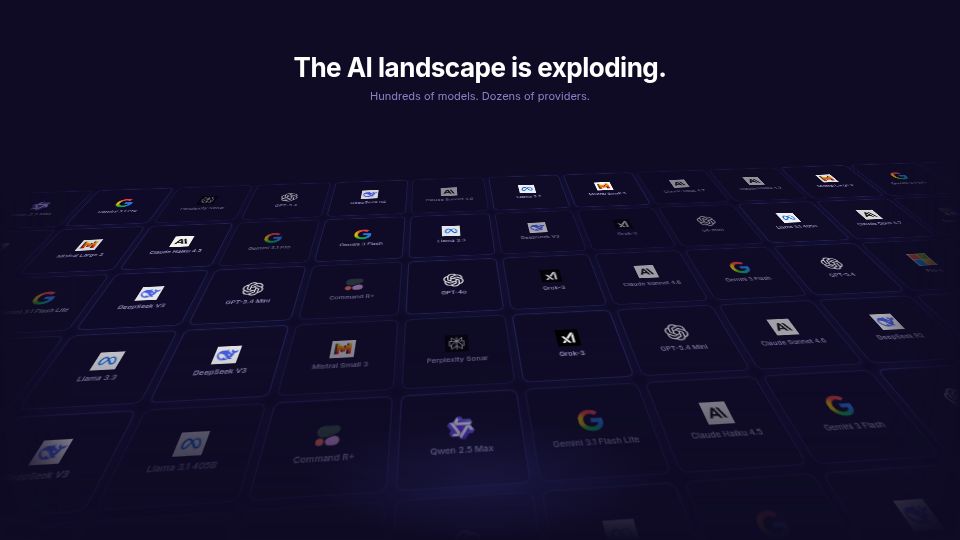
OpenAI, Google, and Anthropic are in a genuine sprint to build the world's most capable AI models. Each new release shifts what AI can actually produce, in real work, at real scale, for real marketing teams. These aren't incremental updates.
What makes this race unusual: nobody stays ahead for long. The model leading today is a credible second or third place finisher in a quarter. Maybe two.
Any platform that bet on one model staying on top is already carrying a real risk. They just might not know it yet.
What Lock-In Actually Costs You
When your AI marketing platform is built on a single model, you inherit every limitation of that model.
Capacity constraints when demand spikes. Downtime during critical campaigns. Pricing changes passed to you with little warning. And capability gaps where your vendor's chosen model simply doesn't perform as well as competitors on the tasks that matter most to your team. You didn't choose any of those ceilings. Your vendor did.
But the real cost shows up when a better model emerges. Here's what that moment looks like when you're locked in: you wait. You wait for your vendor to decide whether integrating the new model is on their roadmap. You wait for their engineering team to build and test it. Meanwhile, your competitors on more flexible platforms have already moved to the better model and are producing better work with it.
Lessons from Enterprise Software
I was an early employee at Salesforce and spent years at Yext as President and COO. We made foundational decisions about which platforms to build on. Some held up for years. Others cost us significant time and resources to undo. We'd built too hard a dependency on a single vendor while the underlying technology kept moving. By the time we needed to change course, we were too deeply coupled.
The lesson I took from those experiences: durable software architectures stay loose on their dependencies in fast-moving technical spaces. They create abstraction layers. They avoid hard vendor commits where the technology is still actively racing ahead.
There is no space in enterprise technology where that lesson applies more directly than AI models. The category is moving faster than anything I've seen in my career. Any platform making hard bets on a single model is taking on risk on your behalf that you didn't sign up for.
What to Demand from Your AI Platform
If your marketing platform runs on a single AI model, I'd push your vendor on a few specific questions.
What happens to your users if a competing model becomes meaningfully better next quarter? What's your timeline and process for integrating new frontier models? When did you last update to a newer model, and how long did it take from announcement to availability in the product?
The standard to hold your AI marketing platform to: model flexibility as a core design principle, not an afterthought. You should have access to the best available model without depending on your vendor's roadmap. Ideally, you should be able to choose among models. Different models perform differently on different tasks, and that matters for your output quality.
Why We Built Quotient This Way
When we started building Quotient, model selection was the architectural decision I was most deliberate about.
We built Quotient on a model-agnostic architecture from day one. Our platform routes to the best available model and updates that routing as the landscape changes. When a new frontier model outperforms the current best, we integrate it without rebuilding the product. That's the abstraction layer. It's how we insulate marketing teams from the race happening underneath them.
This isn't a feature. It's a founding principle. I've been on the wrong side of this decision before and wasn't going to build it the other way. Marketing teams shouldn't have to care which model powers their work. What they should care about is that it's always the best one available.
The AI model race isn't slowing down. The marketing teams that win over the next few years will be the ones on platforms built to keep pace with it. Not the ones locked into whoever was leading the sprint when their vendor last shipped a major update.
Blog
Keep up with the latest
from Quotient
Similar Topics